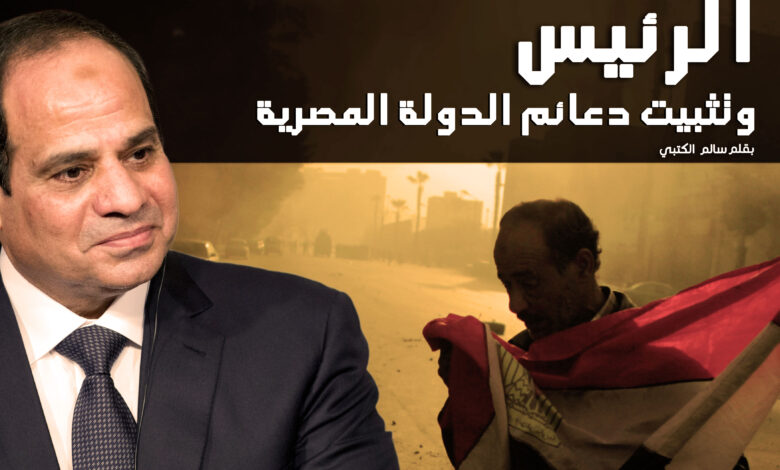
Among legacies on the basis of which many people in most Arab countries behave, is that the president or the political leadership stands behind every nook and cranny in public life, and that any act or decision issued against this or that person is issued with the knowledge of the presidency, or at least a green light from it!! That is the real problem, which is in fact the other side of a long legacy of political practice based on autocracy, which probably did not take into account the internal and external variables surrounding it.
What was going on in whispers in previous periods of time, is now spreading through websites and social media, and things have ramified in a historically unprecedented way. Although the modern smart communication techniques have become a major part of the media and political scene in all countries of the world, the understanding of what is going on around us is still often subject to outdated constants and molds, that are no longer valid to explain much of what is going on around us.
Among these constants is the issue of the President’s instructions and the leadership’s directives, which is an idea that represents a loose theoretical framework inside which many organs and institutions and ministries move, This is why the audience is surprised when the President criticizes the behavior or decision of one of the official parties or institutions. The debate is divided in its interpretation into two teams, the first stems from doubts still rooted in the collective consciousness, considering that the criticism is only an apologetic cover to show the positive side of the leadership and to “beautify” its policies, and that this criticism does not negate the possibility for the institution in question to have received higher instructions directly or indirectly to implementation the very act that was subject to criticism. While a second team sees it from a conspiratorial perspective based on that there are entities working to put a spanner in the works of the leadership, seeking to embarrass it.
The matter may not be limited to this or that, as leadership matters – particularly in a major country having a regional and international importance like Egypt, are so complex, interdependent and overlapping that it is hard to interpret them in the context of limited scenarios and alternatives,. This is why it is difficult for some to understand what is behind some of the attitudes expressed by the Egyptian President Abdel Fattah el-Sisi recently, including –of course – his position on the way authorities behaved towards one of the caricaturists, where the president implicitly acknowledged the failure of the concerned authorities in “communication with and understanding” young people, he literally said, “these are natural things in a State that is still in revolt for five years, where things have not been adjusted yet.”
This is a fact, dotting the i’s and crossing the t’s and to re-adjusting the standard rules of behavior in a society that is still in a state of political and social upheaval caused by the enormous transformations witnessed in 2011 and 2013, requires time, and during this period things should not be interpreted and viewed according to an old perspective, nor evaluated according to standards that have fallen at the end of the political eras associated with them.
The TV intervention of President Abdel Fattah el-Sisi commenting on the subject of the caricaturist included critical points that deserve to be strongly highlighted, notably his pledge to achieve a balance between security and human rights requirements, which means that he is fully aware of the sensitivity of the relationship between these two variables, as adjusting this relationship sounds like walking on a tight rope amid thorns, which is actually “a sensitive and delicate matter that requires considerable effort and accurate follow-up,” as the President said.
What I like most about the interventions of the President is his keenness on interacting and engaging with the issues and topics of concern to the Egyptian public opinion without an intermediate, not to mention that the talk itself has clarified many issues, given answers to many questions, and entered obscure areas that have remained during the past period questionable to the public opinion, observers and specialists, such as the position of the Egyptian presidency towards freedoms and their roof and spaces of criticism and their margins, and the limits of permissible criticism, where the president clearly and openly confirmed that he “does not get angry because of criticism,” adding that ” difference is natural and normal.”
My personal conviction is that the institution of the Presidency has begun the first step in a journey of building trust with the youth specifically, both in terms of setting the broad framework of the mutual behavior, or the consecration of the rules of transparency, openness and goodwill; and the latter is a very important and sensitive point at the same time, because nation-building requires concerted community efforts of all, and in the heart of them young people’s efforts, on which countries are betting in building the present and in addressing the challenges of the future, which are very difficult strategic challenges, and which President Sisi himself, qualified as being beyond imagination.
Maybe the President’s talk was not liked by some, but it seems very positive and optimistic for me personally, by virtue of that building the future on strong basis starts from the area of openness and disclosure. There is no time to sell dreams or market illusions, and there is no room for fooling the people, because hiding the real situation in any country has become a quasi-unachievable dream in light of the dynamics of smart information and communication networks revolution.
Perhaps what also draws my attention the most in the President’s interview is his strong interest in the issue of “consolidating the State and preventing its collapse,” considering that as the focus of his strategy during the next four years, an issue whose importance and centrality may not be accurately estimated by some, but the reality is that this is a very important stage and a vital strategic demand. Consolidating a State does not mean by extension preventing its collapse only, but also providing the necessary immunity for this construction to prevent its exposure to imbalance in the periods to come, with all what that means, from laying the legislative and legal foundations and the institutional structures, to rebuilding facilities and infrastructure, and also interacting with the public demands via a social contract based on mutual trust between the people and the leadership.