Security authorities in the countries targeted by terrorist organizations are facing a dilemma to be reckoned with, regarding the identity of potential terrorists.
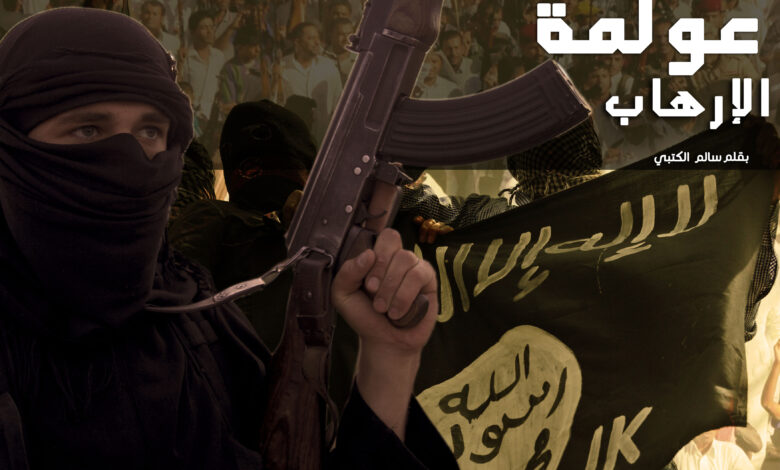
Indeed, terrorist attacks on several countries over the last months revealed an incursion and a spread of terrorist ideology among the citizens of many countries. This obnoxious thought is no longer linked geographically and ideologically to specific countries or areas as in the past, but terrorism organizations have turned into an “umbrella ideology” beneath which the owners of this thought are subsumed, regardless of geographic location.
There are several factors that contributed to the production of this complex reality, in the forefront of which what might be called the self-fission-explosion of the “Al Qaeda” organization, following the killing of former leader Osama bin Laden, and the failure of Ayman al-Zawahiri in filling the “leadership” vacuum left by the former commander, and the fragmentation of the organization into mosaic “branches” spread in different countries and regions, some of which are still working under the command of the organization in terms of form only, without an organizational commitment, and others, which are the most numerous, were affiliated under the banner of the “Daash” organization and swore allegiance to al-Baghdadi, for reasons that are not all intellectual or dogmatic, but mostly related to funding, self-interests, media advertising, selfishness and love of fame, from which the majority of those belonging to terrorist organizations suffer, by virtue of the fact that in their eyes, “Daash” represents the image of the “hero” that lives in their sick fantasies.
The former factor is not the only element in shaping the current terrorism landscape. Indeed, smart communication technologies and social networking sites have also played a role is the globalization of the terrorist ideology, as these means “provided major services” to terrorist organizations, and helped in the construction of virtual recruitment camps and propaganda platforms, from which these organizations jumped on the security and regulatory barriers and even the geographical ones as well. We should not ignore the impact of the high-tech advertising methods followed by “Daash”, including the translation of video clips aimed for recruitment and polarization into languages that have been very carefully studied and selected like Urdu, Tamil, Bahasa and Indonesian and others, in search for “opening” new outlets for attracting and recruiting!
In the presence of the global online promotion of terrorist ideology, and the conversion of this ideology by “Daash” into an “attractive” model to a marginalized or vulnerable slice of young people and teenagers in different countries of the world, tempting them to obtain funds (Daash grants its terrorist members about two thousand dollars a month, an amount which was finally reduced to one thousand dollars under al-Baghdadi’s decision because of what was described as a decline in the financial resources of the organization), and enjoy women, home ownership, power and control over others, which creates a formidable force of attraction to these segments of young people, terrorism has turned into a “business” and a profitable trade, where the interests of terrorist organizations are mixed up with the interests of adventurous categories aspiring to amass money with intelligence agencies of States sponsoring terrorism, and use it to achieve their strategic objectives regionally and internationally.
In light of the above, I am no longer very surprised at the presence of a remarkable combination of elements of the terrorist ideology. “Daash” includes among its elements in Syria and other places, terrorists that are citizens of nearly 80 countries, including countries not related to the unrest in the Middle East or other places, like Japan or Singapore, and others! . And the risk is that the globalization of terrorism is no longer confined to the “Daash” thought, but the phenomenon of terrorism itself has become associated with this wide geographical spread, regardless of subordination to “Daash” or other organizations. Indeed, the Saudi authorities finally revealed the arrest of terrorist elements within non-Arab nationalities, in a way that is worth attention and interest.
Some researchers may believe that the Afghan jihad stage has known similar features, where the Afghan scene included the presence of elements from different countries, which is a fact, but that stage is quite different from what is currently happening, both in view of the expansion of terrorist coverage and the spread of the “terrorist broadcasting” to include almost the whole globe, or because the effort made in polarization and recruitment does not compare to the foregoing. In the past, the Afghan scene was a result of concerted efforts of countries and intelligence services having huge potential, but what is happening now is only a product of Internet sites and the efforts of a group of technicians belonging to “Daash”, working in small rooms inside Syria or other countries, no difference!!
The problematic in this complex scene is that efforts to combat this phenomenon on intellectual and ideological terms are still at a standstill, and the issue turned into dialectic conflicts between the religious and cultural elites, and almost everyone slid to marginal conflicts and side battles around the “sacred” and the “profane”, and legal and cultural boundaries to the denigration or respect of religions, which undoubtedly contributes to strengthening the chances of the spread of terrorist ideology, and gives it free gifts through diverting everyone from the main issue and turning the focus of attention to dialectic swamps that may take out a long time, and probably some communities cannot come out of them at all!
Everyone then is in the face of a moment of absurdity par excellence, elites do not stop repeating the eternal argument that military efforts and security prosecution campaigns are not enough on their own to eliminate terrorism ideology, but what also happens is that these elites stand by idly despite the stagnation and sterility of the strategies that are supposed to target the terrorism phenomenon intellectually, culturally religiously, and educationally!
We do not want to wait until Baghdadi or another terrorism leader declares more victories. Taking action now and not tomorrow is a duty that deserves to be at the forefront of attention.