There is no disagreement on the depth of the changes and transformations brought about by new technologies in communication, not only because they produced new variants that occurred in the media by the emergence of new media with their different means, but also because they pushed the traditional media to the zero option: either evolve and keep pace with the times or get extinct.
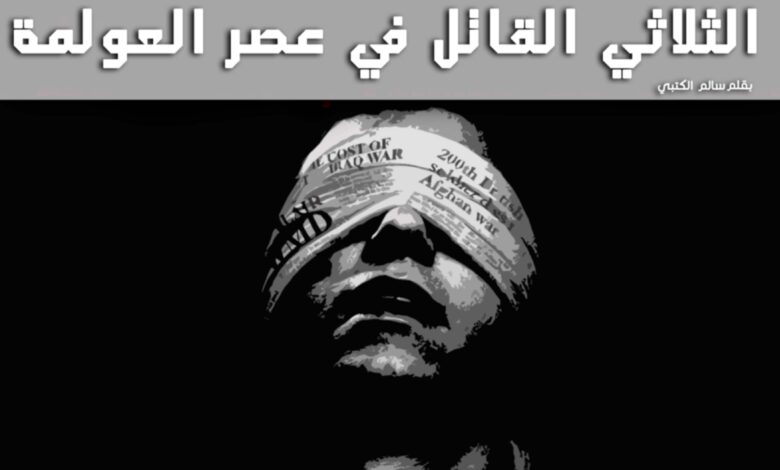
Among these changes which are difficult to deal with in an article, or even a series of articles, is this convergence of three variables that are technology, media and extremist thinking, a combination that is not less threatening than weapons of mass destruction, it is indeed like real weapons of mass destruction in the Twenty First Century.
Realistically, mass media history goes back to the appearance of the TV in the first half of the Twentieth Century. Radio and the press before, did not have the enormous impact of this magical device, which created a culture of image, with its ability of influencing, polarizing and mobilizing people behind the ideas of specific cultural values through animated dramatic and footage tools and others. The effectiveness of the media has increased and was established after the advent of the Internet and the massive merger between the two most dangerous means in human history so far, and the inauguration of the era of the free movement of information balanced with the free movement of goods, and then the emergence of a huge industry with high reliability in developed economies, which is knowledge and information industry.
This mega-industry did not benefit countries’ economies only, but also benefited terrorism and extremism organizations in the world, and has realized the principle of the globalization of the terrorist ideology. Many online sites are transformed into arenas of recruitment, training and attracting to these organizations, which transferred a lot of their headquarters from the real world in the Tora Bora forests and caves of Afghanistan to cyberspace, and selected virtual headquarters that are often difficult to be monitored and chased by the relevant agencies in various countries.
The media in the era of globalization is no longer just an arena for entertainment or political mobilization, but it now consists of fields for training on murder and bloodshed, and it has become easy for a young man in his early life living geographically far in any Arab or Islamic country or elsewhere, to find a way to manufacture improvised explosive devices that have been deployed across a computer by a terrorist living in a European or Western country or vice versa!
Simply put, the media has often turned into an instrument of murder, incitement and bloodshed, either directly through ideological incitement on the multiple social networks and sectarianism satellite channels that incite day and night on the conflict between civilizations and religions, and even within the same religion, as is happening among some Sunni and Shiite satellite channels. About this issue, a Western media expert says that the media completes the task initiated by terrorists, and he was referring to the publication of videos of slaughter and killing by “Daash” via the site “YouTube” or via news satellite channels. He meant that the media disseminates the message of intimidation, terror and panic that terrorists wanted to broadcast among the largest segment of people in the world!
The truth is that this is a point of great controversy among experts in media, psychology, sociology, and also in law. Some believe that the adoption of charters obliging everybody not to circulate these violent materials and prohibiting them represents withholding information and the public’s right to know, even if it comes to information of this kind. And on the other side, some believe that there is a moral responsibility towards the open-door policy in the publication and circulation of information, and that this issue should be restricted with specific standards and rules, so that the world does not drift behind the goals of the organizations that are against the human civilization, humanity and religions.
In all cases, the mere raising of these discussions is in itself a good thing. Silence in such cases is the worst option, and discussions inevitably lead to offering solutions, alternatives and options to suit all colors of the community rainbow in the countries of the world, each according to its circumstances and to the levels of community, educational and cultural awareness prevailing.
What concerns me in this debate is that this complex mixture, which combines modern technology, mass media communication science and extremist thinking, has contributed strongly to creating strategic challenges and threats that were not perceived by policy planners and policy makers when they were excited about the globalization waves, as the focus of most of the thinking was on aspects and dimensions such as the freedom of trade and the cultural and values exchange. The United States focused on its part, specifically, on the idea of ”modeling the world” through the consecration of the cultural values prevailing in the American model defined so much as “the culture of McDonald’s,” and it succeeded through these values and by employing the media and modern means of communication and the means of social communication to overcome what geography created, the traditional fences that remained for centuries and decades concealing the eastern world from the west.
There is no doubt that this unprecedented humanitarian outreach has positive characteristics and numerous advantages, walls have been demolished and effects of geography have collapsed, but came terrorism and the spread of terrorist thought to point to “side effects” of the revolution of communication and information technology. But what draws attention here is that the countries and regions that benefit the least from the income of this revolution on the economic and commercial levels, are the most affected by the undesirable side effects! Some experts say that the reason for this is that the communities that are absent from the knowledge race will play by extension, a counter race, which is a race of ignorance and abuse of the technical progress boom. This analysis holds some truth, but it puts the blame and responsibility on States and governments in which the phenomenon of terrorism and extremism prevails, without reference to the responsibility of the developed countries in providing technological support and assistance to these countries to immunize their communities and protect them from the chaos of cyber extremism.
In any case, we live in an age of risks, challenges and threats. There is no doubt that the years ahead are pregnant with more mutations under enormous advances in communication technologies, and under the striking mosaic spread of extremism and terrorism organizations.