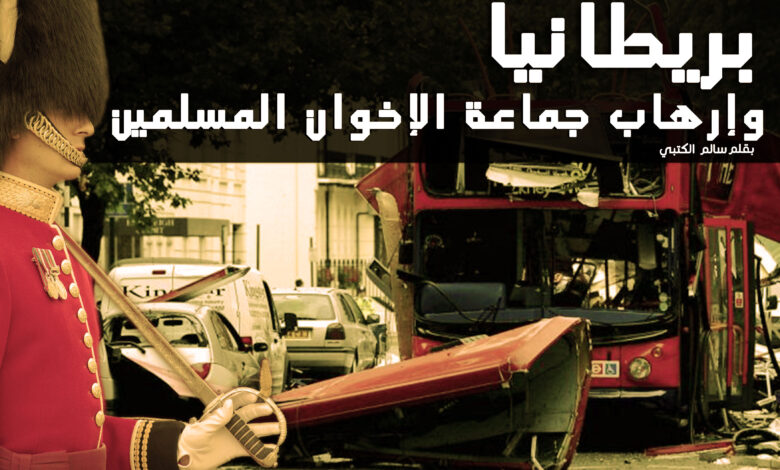
The results of UK investigations into the Muslim Brotherhood activities reportedly revealed serious aspects of the activities of the organization in the UK. The results of the investigations came contrarily to the hopes of the organization, revealing that the membership in or links to the group are potential indicators of extremism. Since then, the members and activities of the group were being watched by security services.
Some believe that the report, which concluded that the group should not be classified as a terrorist organization or banned, is a strategic win for the Muslim Brotherhood, but this analytical view is inaccurate and misguided because the group was waiting to investigations, conducted since April 2014, to discharge it from any links to violence and terrorism regardless of the ban or classification as terrorist. The investigation could not expose the secrets of the group in the UK. the history of the Muslim Brotherhood in the UK proves that members of the group, since their coming to the UK decades ago, were carefully working in total secrecy, anticipating a moment of scrutiny that the group was sure will come.
Surprised by the results, the organization issued a statement to denounce it and accused the British government of bad faith. The relationship between the UK and the Muslim Brotherhood is not new. The complicated relationship has political, security and intelligence dimensions. Historically, the interaction dates back to the early stages of the emergence of the Muslim Brotherhood during the period of British colonialism in Egypt, specifically in 1928, when the group originated inside British army camps in the Egyptian city of Ismailia. The details of these relationships can be found in many references and literature works published in Egypt and elsewhere. The relationships between the Muslim Brotherhood and other ‘Jihadist’ Islamic organizations and movements and Western intelligence services (that funded these groups and organizations and trained and used them during the Cold War, specifically during the Soviet occupation of Afghanistan in the ’80s) are confirmed and documented. Many aspects of these relationships are believed to still exist today, so it is difficult for both parties to deny and repudiate it.
Based on the foregoing, the issue of banning the Muslim Brotherhood in the UK is not subject to legal and security investigations, as in some Arab and Islamic countries, because of the political and security factor in these relationships. The most important point in the results of the investigations is the reached convictions and not the recommendations and consequent decisions, given that the British have confirmed that the ban on the group in the UK is still under study, meaning that the debate on this the matter has not yet been officially resolved.
British Prime Minister David Cameron has confirmed that the report had concluded that some fractions of the Muslim Brotherhood movement had ambiguous relationships to extremism that leads to violence. Cameron said the report found that branches of the group were linked to ‘violent extremism’, and that his government would step up to extensively watch the views and activities of the members of the group.
There are thus two important points in the British report, which condemns the group without banning it. The first is that investigation did not discharge the group from having links to violence and terrorism, but confirmed and documented and added further doubts around that, especially when the report considered that ‘branches of the movement have very ambiguous relations with extremist violence, as the group was – as a doctrine and as an organization – a bridge used by some people who later engaged in violence and terrorism.’ There is no doubt that these mysterious relations will be subject to further investigations in the Western world. The second point is the fact that the Muslim Brotherhood constitutes a gate of access to terrorist organizations. It is already the largest incubator of extremists and terrorists despite that it seems it does not practice violence openly. Spreading terrorist ideology is dozens of times more dangerous than terrorist acts. The idea is the foundation and main instigator of committing terrorist crimes and instilling hatred and resentment in communities, ultimately leading to a state of alertness and often ending with terrorist attacks.
The results of the British report are useful, particularly at the level of discussion about drying the sources of terrorism. The report highlights the principles of radical thought from which terrorist organizations inspire their sterile ideas and beliefs. These results are also useful in terms of restricting the activities of the group and its members in the UK. The country is no longer a paradise to the group, from which it initiates plots and plans in Arab and Islamic countries. This path should be observed carefully; the history of the Muslim Brotherhood’s relations with Western countries has witnessed transactions and conspiracies on States and governments. Factors are volatile and paths and interest change accordingly.
If the UK, that shares such a common history with the Muslim Brotherhood, reached the conviction that the group’s members are linked to violence and terrorism, it behooves the other States to pay attention to the results of the British investigation, address the issue of the group in their own countries, and search for links the group may have with the perpetrators of the recent terrorist attacks, whether in France or the United States or elsewhere.