Can we elaborate proactive monitoring plans for potential terrorist personality? We need to analyse the social phenomenon of terror to work seriously on preventive paths to eradicate this evil thought in the long run.
A suicide bombing was perpetrated by a member of Daesh in the Saudi city of Abha recently. This particular terrorist attack involved targeted Sunni people not Shiites while the organization claims to be defending the Sunnis against Shiites. It means that the only principle for Daesh is murder and bloodshed.
Sunni mosques have been targeted by Daesh. The group already committed similar crimes in Iraq. This means that murder is the credo of this organization to achieve their interests and objectives, regardless of their empty claims.
Counterterrorism needs tremendous efforts and preventive plans that focus on early detection of candidates and sympathizers with Daesh before they join its ranks.
Can we elaborate proactive monitoring plans for potential terrorist personality? Many Western studies and research institutes made reasonable strides on this path. We in the Arab and Muslim world need similar research efforts as an important part of the plans and strategies to combat the terrorist ideology in general.
There are several educational programs that spread awareness about negative societal phenomena such as addiction. Educational programs to study the terrorist type can be developed, and this can be useful in proactively identifying the young people under the influence of the terrorist ideology.
Psychological studies indicate specific features of the elements of criminal organizations, and stress that they are not individual attributes but common features. They are central to the individual’s thinking in adolescence and youth when recruitment and mobilization occur.
One of the problems facing the Arab and Muslim communities in tackling extremism and terrorism is the lack of social, religious and psychological guidance and counselling in adolescence. This exacerbates the effects of this problem in light of the decline of the role of the family and the rise of other influential actors, such as the social media.
Another problem related is the absence of attention to youth in official policies in most Arab and Islamic countries. Rather than proper education, the youth have preachers who use a kind of language that only discourages them.
The Arabic media and drama constructed a stereotype of the terrorist who is ridiculous. This image is instilled in the mind of the majority of the audience over time, making it difficult to detect any radicalization into individual wolves or organizational involvement.
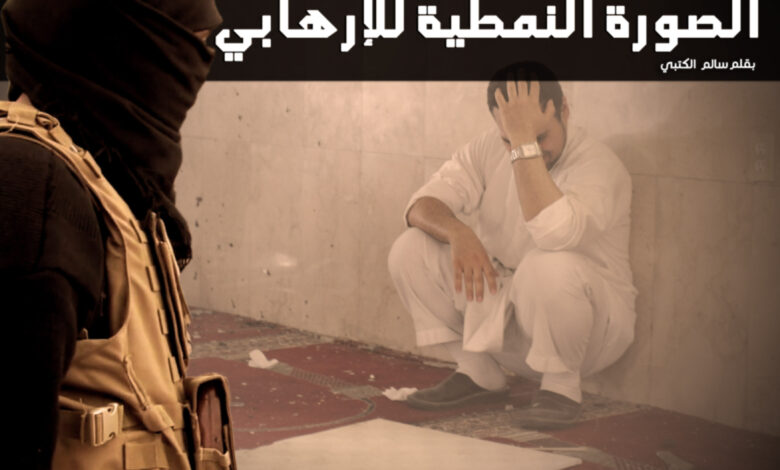
The terrorist image, which was formed through years ago in the collective consciousness of many, consists of fixed elements, such as the beard, white short clothes and a frown, use of rare religious phrases and vocabulary and a tendency towards women without showing it, sometimes in a naive way. The stereotype also depicts people unable to think for themselves, and this perhaps helps Daesh to attract some youth and adolescents in several Arab countries. The organization has propaganda tools to address young people and speak their language, unlike the traditional image rooted in the collective consciousness about the terrorist. The organization is keen on looking different but sometimes impressive by using means of artistic photography and special effects.
Indeed, some propaganda of the organization is presented in a comic way destined to young people to respond to reports or news about the organization.
We need to analyse the social phenomenon of terror to work seriously on preventive paths to eradicate this evil thought in the long run, without neglecting short-term dangers, through different strategies and tools