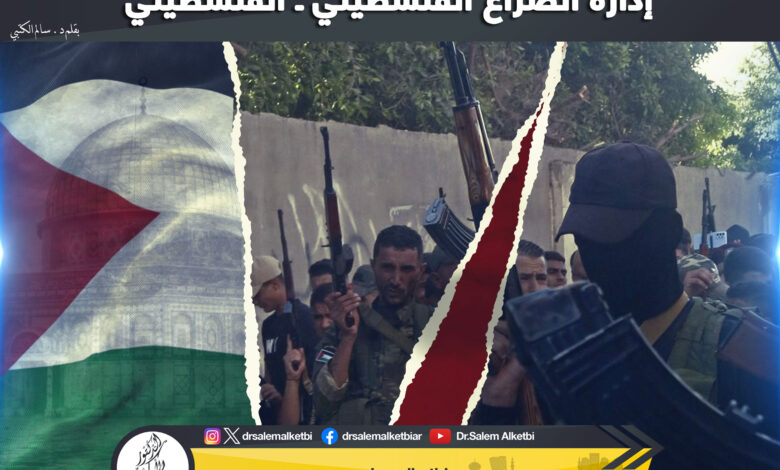
The recent clashes that erupted in the Ain Al Hilweh refugee camp, a longstanding abode for Palestinian refugees in Lebanon, paint a vivid picture of the complexity underlying the Palestinian conundrum. These confrontations pitted factions aligned with the Fatah movement, under the leadership of Palestinian Authority President Mahmoud Abbas, against groups associated with warring jihadist entities.
This encampment, in existence for over seven decades and serving as the largest Palestinian refugee camp in Lebanon, houses over 60,000 persons from a pool of approximately half a million registered Palestinian refugees served by UNRWA in Lebanon.
As one among nearly a dozen camps scattered across Lebanon for Palestinians, this site bears considerable symbolic weight when it comes to addressing internal Palestinian discord. Furthermore, it brings to the fore Lebanon’s endeavor to establish and uphold its national authority within its territorial boundaries, transforming it into a locus of distinct autonomy, particularly concerning its security matters.
The clashes that unfurled within the encampment unleashed a volley of automatic and anti-tank weaponry, casting a shadow of bewilderment and prompting a slew of probing questions in this narrative.
The Fatah movement didn’t hold back, delivering statements that castigated the events as a “cowardly and odious act.” Meanwhile, the Palestinian presidency underscored the camps’ security as an unyielding “red line.”
Personally, I find myself pondering for whom these metaphorical “lines” are etched, and how long the Palestinians will wield buzzwords and attention-grabbing headlines, without a precise dissection of their quandaries? It’s of paramount importance to address reality with candidness and transparency, steering clear of sweeping generalizations, nebulous language, and concealed insinuations.
Clearly, the inner Palestinian rifts unfolding within Lebanese territories impose a weighty burden upon a country already grappling with a labyrinth of profound crises.
In a tale that spans decades, the crises at hand thrust Lebanon’s sovereignty into a zone that has long eluded the grasp of its security apparatus. What’s more, it introduces a precarious spark that fans the flames of potential perils confronting this country, already shouldering the weight of other destabilizing militias (Hezbollah) with strings pulled by foreign hands.
The mere existence of a ferocious internal strife within a state’s borders, devoid of the capability to rein it in or even wield influence over it, forms a perplexing enigma whose persistence defies reason. States aren’t run in such a disjointed manner, and grappling with the refugee conundrum shouldn’t stretch to the extent of establishing self-governing enclaves.
Even Najib Mikati, the helm-holder of Lebanon’s leadership, found himself compelled to confer with Palestinian leaders before embarking on any measures or delivering directives aimed at quelling the turmoil unfurling within the encampment nested within Lebanese soil.
The term “unchecked,” used by Mikati, casting a spotlight on the actions of Palestinian entities that have regarded Lebanese territory as their unfettered playground, serves as an unfiltered depiction of the underpinning reality fueling the recent clashes. It also lays bare the intricate tapestry of the Palestinian issue, now mired in the intricate web of geopolitical currents, stemming from diverse catalysts. Foremost among them is the long-standing schism and acrimonious feud among factions, movements, and organizations, embroiled in a contest for power, status, and agendas far removed from the crux of the matter or the well-being of the Palestinian people.
Over the years, a ceaseless echo of rhetoric about bridging the chasm in Palestinian ranks has resonated. If merely half of these efforts, facilitated by numerous regional players, had been channeled into earnestly seeking settlements and authentic solutions for the heart of the issue, the landscape might well have looked different. At the bare minimum, a glimmer of progress would have materialized in untangling dormant problems, particularly the plight and living conditions of the Palestinian people. To the point that certain voices now contend that attaining the elusive ideal of unity and Palestinian reconciliation has become even harder than working out the very issue that these leaders and entities deal with.
In truth, the agreements inked for the sake of partisan reconciliation have outnumbered those directly tied to their actual cause.
The Palestinian situation finds itself woven into a broader Arab scene marked by schism and disintegration across various countries. It’s a theater that shuns the middle ground and consensus avenues, tilting towards confrontation, collisions, and saber-rattling once the pathways of negotiation have been abandoned. This Arab tapestry replicates itself with differing gradations and extents, spanning from Sudan and extending to the very heart of Lebanon.
The aftermath in the Palestinian scenario bears no lesser weight than the tumultuous episodes unfolding in other strife-ridden corners of the Arab region. The situation has cost a substantial amount of global empathy, not merely on an international scale but also within the Arab world. It echoes the sentiment of many, branding it a “just cause championed by failed advocates.”
Alas, the casualties in all cases are the people, whether Palestinians or their fellow Arabs, all caught in the crossfire of power plays and the supremacy of factions and militias over the sanctity of the nation-state.