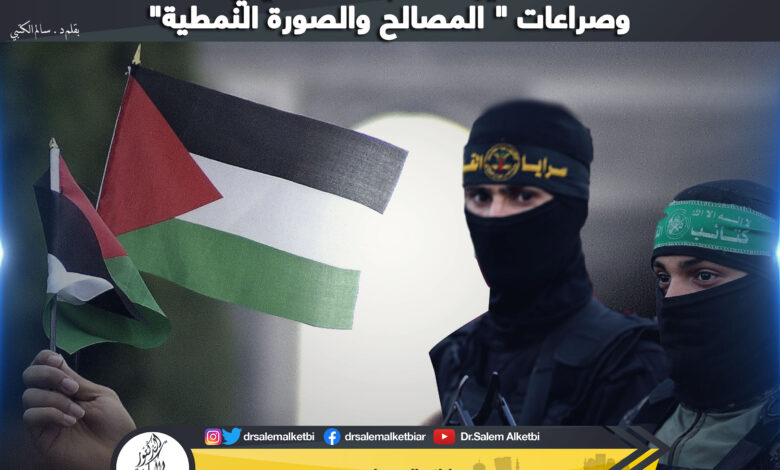
Several recent media reports have addressed the reasons why Hamas did not participate in the recent military clashes in the Gaza Strip between the Israeli army and Islamic Jihad. Some reports cited reasons that, in their opinion, prevented Hamas from participating and intervening in the fighting.
These included the economic boom in the Gaza Strip as a result of the recent period of calm, or what some literature describes as the politics of “economy for calm.”
These include the incentive work permits issued by the Israeli side to Palestinians, which represent significant support for the Gaza economy, and the movement’s focus on rebuilding its popular fold, which has been diminished by the extent of destruction in the Gaza Strip as a result of the series of crises spawned by the extremist movement.
There is also the desire of Hamas leaders to restore their international and regional profile and focus on political and diplomatic action within the framework of the internal conflict, whether with the PA or other movements.
My own opinion is that the legacy of the Palestinian crises does not indicate the possibility of the two extremist parties (Hamas and Jihad) converging on the same battlefield, despite the fact that they are the product of the same womb: the terrorist Muslim Brotherhood.
In addition, Hamas has not yet regained the military capacity to act and launch more strikes against Israel, which has been fighting a war in the past year in which it has been hit hard by Israeli strikes. The leadership of the movement in the Strip is fully aware that any escalation at this point will not be supported by the people of Gaza, who have not yet healed the wounds of the last battle.
There is a desire on the part of the people of the Gaza Strip for continued calm, work and reconstruction. The extremist group Hamas is the de facto ruler in the Gaza Strip.
So its silence during the recent military escalation raises real questions, and familiarity with the set of reasons for Hamas’ abstention, as specifically reported in Palestinian media reports, can explain the movement’s position.
But it also raises doubts about the intentions of the extremist Jihad movement and its rivals in the Gaza Strip. Are they deliberately luring the Gaza strip into a new crisis that undermines the gains of calm of the last period?
In any case, far from being speculative, despite the supposed unity of goals, interests and objectives of the two extremist movements claiming to operate under the banner of the Palestinian “resistance,” difference was obvious.
This points out that the whole issue is a struggle of political interests for power, influence and status, and among all this there is no room for the interests of the Palestinian people to be taken into account by either side when it decides to pacify or escalate, except when these interests correspond to those of a movement or organization.
The recent clashes in the Gaza Strip are not the only evidence of the divergence of the agendas, goals and interests of the Palestinian movements. In all previous cycles of escalation, Hamas had a monopoly on confrontation with the IDF for itself. The rival movement was content with watching and following.
Yesterday the scene replayed with a switch between the Palestinian side. The “Jihad” movement headlined the news, with the total absence of the movement that controls and governs the Gaza Strip. Its leaders simply expressed solidarity without any involvement, so that it looked like an opportunity for each side to learn about the capabilities of the other side.
In other words, managing the confrontation with Israel and its results became one of the cards of the internal Palestinian game. It’s something worth dwelling on. All of the above shows that the interests of the Palestinian people, chanted by all those who lead the Palestinian scene and speak on their behalf, are not at the top of the priorities of these leaders.
Jihad representatives have been visiting Iran and Lebanon, while Egyptian diplomacy has intensified its efforts to mitigate the consequences of renewed Israeli military strikes against the Gaza Strip.
No one knows what the debate is between representatives of this Palestinian movement and their counterparts in the Revolutionary Guards and Lebanese Hezbollah, and how they believe Iran or other countries can support them politically or militarily in these trying geopolitical circumstances. This is why it is time for many Palestinians to stop politicking the cause and the Palestinian people.
They realize that the game of escalation and de-escalation according to the objectives of these movements and the diktat that comes from their regional supporters has got to stop.
The Palestinians are waiting for those who seek for them their just and legitimate rights sincerely, without games of “resistance,” claims of heroism, propaganda and interests calculations that change not only from one movement to another, but also from one leader to another within the movement.