On many occasions, we read many statements issued by the leaders of the European Union regarding the cohesion and strength of the Union and the keenness of these leaders for Europe to have the international status that suits it. I do not know why the European Union stands quiet in the face of Turkish provocations to Greece, one of the countries of the Union, although the most powerful trio in the Union confronted, last August, the strict American stance against the Iranian mullahs! Indeed, France, Germany and Britain announced at the time in a joint official statement that they would not support Washington’s request from the United Nations to re-impose sanctions on Iran against the background of accusations directed against Tehran of violating the nuclear agreement concluded in 2015, and they thwarted US efforts to activate the so-called “Snapback” mechanism, which aims to re-impose sanctions on Iran, to the extent that US Secretary of State Mike Pompeo accused the European “trio” of siding with Iran’s mullahs.
In complete contrast to this position, European reactions to successive Turkish provocations, especially, especially that the matter was not limited to threatening the sovereignty of Greece, one of the countries of the European Union, but extended to include repeated insults to French President Macron, and threatening the interests of the European Union countries in Libya, whose stability and security is one of the keys to European security and stability.
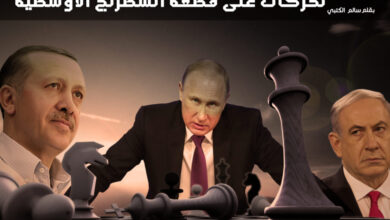
It is true that the major European countries do not remain silent about Turkey, but their reactions are still below the level of Turkish danger and threat, especially since the ambitions of “Sultan” Erdogan are no longer just analyzes or speculations, but he is talking about them openly, as he recently indicated that his country is seeking to extend peace in the Eastern Mediterranean region in its quality as “the heir to the Ottoman civilization”. It has become clear that the exacerbation of the Turkish economic crises is suffocating the “Sultan” and pushing him to commit more external follies, as he is targeting the European Union countries, in word and deed, remarkably, after he has become certain of the “death” of the idea of Turkey joining the Union, which leads him to adopt a different language and approach towards Europe, believing that it is going through times of weakness and retreat, which makes it difficult for it to stand in the face of his constant ambitions and provocations.
Some observers believe that the escalation with Europe does not frighten “Sultan” Erdogan, but rather it is a valuable opportunity to redistribute roles in light of the collapse of the existing global system and the desire of international powers to redistribute and arrange roles according to the strategic data left by the Corona crisis, in addition to the hidden feelings of hatred. Erdogan has towards Europe, and his ideological views that dominate his policies and orientations. It is also believed that this escalation is met with American silence, which expresses President Trump’s position towards his European partners.
Whatever the reasons and motives, the continuous Turkish provocations and the crude intervention in several crises at the same time without a serious stance from the major powers, especially the European Union, as the party most affected by Turkey’s behavior, encourages the “Sultan” to continue this behavior.
The latest European reaction to Turkey came from the German Foreign Minister Heiko Maas, who recently called on Turkey to “put an end to the cycle of appeasement and provocation” in the eastern Mediterranean after Ankara recently sent an exploration ship to search for natural gas, threatening to escalate tension again with Greece. European Union foreign affairs official Josep Borrell only warned Ankara; and as for Greece itself, it called on Turkey to immediately back down from its “illegal” actions. Greek government spokesman Stelios Petsas said, “Turkey has proven that it lacks credibility, and that the European Union does not need to wait two months before taking action”. Greece urged the European Union to sign sanctions against Turkey.
It is noteworthy that, in the midst of this crisis created by Turkey, Erdogan “informed the President of the European Council, Charles Michel, of the need to make progress on improving relations between Ankara and the European Union!”
The truth is that the European Union is still sticking to a thin thread linking it to Turkey, as it contented itself with denouncing Turkish provocations, and alluded during a summit held earlier this month to impose sanctions if Turkey did not stop illegal drilling and exploration activities in the waters claimed by Cyprus and Greece, as the statement issued by the European Council on October expressed that Turkey is taking “unilateral measures that contradict the interests of the European Union and violate international law and the sovereign rights of the member States of the Union”. Nevertheless, it contented itself with threatening sanctions, expressing its expectation that Turkey would comply with its obligations. The President of the European Commission, Ursula von der Leyen, warned that “if Ankara continues its illegal activities, we will use the means at our disposal”, and she added that “economic sanctions have been prepared and are ready to be ‘implemented immediately’”
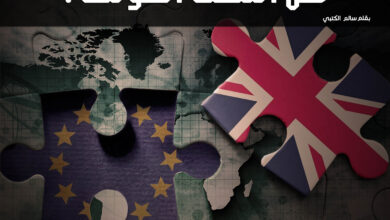
It is clear that the issue lies in the European division over punishing Turkey, and this is one of the dilemmas of joint European action and European foreign policy in general, as European leaders are supposed to study this dilemma that weakens Europe’s status and prestige, and limits its effectiveness in influencing international crises. A united Europe must be heard. The European Union has to let the world hear its united strong voice in all crises, especially those that are linked to its strategic interests,; otherwise, it risks not having the desired effect in the post-Corona world.