Dialogue between the Iranian mullahs and the Trump administration is possible, I have no doubt, despite the mullahs’ repeated rejection of any dialogue with the US and the hollow slogans chanted by the politicos in Tehran.
Close attention to what is going on in Iran uncovers how good the mullahs are at the large-scale role-playing game they have been playing in recent days.
Some politicians, including President Rouhani, have been talking about a conditional dialogue with the United States. Meanwhile, the so-described hardline politicians and leaders of the Iranian Revolutionary Guards, who are most affected by US sanctions particularly on the petrochemical sector and companies controlled by the Revolutionary Guards, insist on rejecting it.
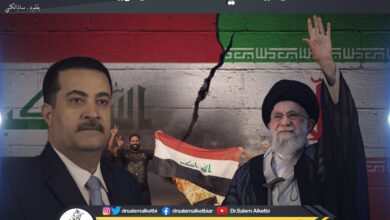
This Iranian game is fooling some analysts, who think there are differences within the Iranian regime on how to deal with US pressure. But if you understand the dynamics of Iranian politics, you realize that it is all in the hands of the supreme leader Ali Khamenei. He assigns roles, switching between calm and escalation.
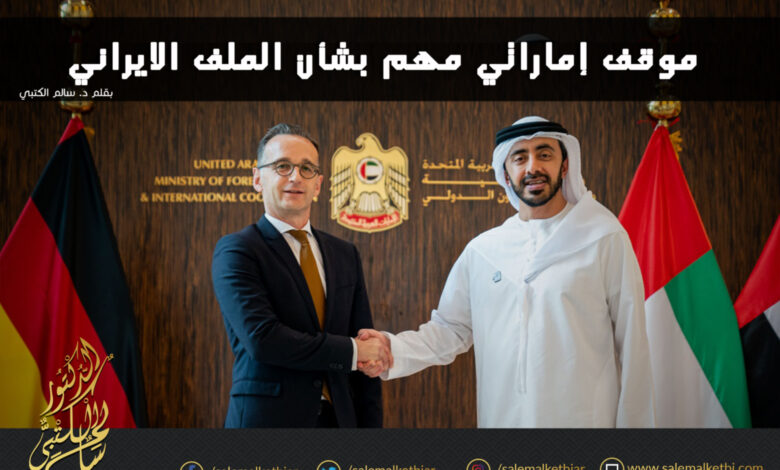
The main purpose of this game is to raise the ceiling of Iranian requests transmitted by international emissaries who are coming to Tehran, including most recently the German Foreign Minister Heiko Maas, coming from a visit to the UAE.
Japanese Prime Minister Shinzo Abe, who is visiting Iran this week, is expected to try to dispel tensions between the United States and Iran and play a mediating role. Many expect this mediation to yield some results, given the privileged relationship between the mediator and both parties to the crisis.
It is my opinion that the Iranian crisis will change in the coming period. Several facts support that. One of them is the entry of several regional and international parties into the direct and indirect mediation process.
At the regional level, Iraq has demonstrated its interest in easing tensions and avoiding a military confrontation between Iran and the US. It is not a traditional mediator or a political actor who seeks to steal the show as do some adventurists in the region, like Qatar.
Iraq is taking mediation as seriously as possible. Iraqi leaders have probably made great efforts to transfer and exchange messages between the parties to the crisis and to communicate with parties involved in the detente, such as Japan and Germany.
But Iraqi mediation will likely stop at the point of transmitting messages and clarifying intentions, leaving the door open for other international actors such as Japan to play a mediating role.
The Japanese Prime Minister would not risk an extraordinary visit to Iran without seeing some evidence of success, even by ending the prospect of a military conflict between the two rivals.
In this atmosphere to which the Gulf has become accustomed since the Iranian revolution of 1979, due to the Iranian regime’s practices and interest to maintain tensions and turmoil in the region, the positions of the Gulf and Arab States are of particular importance.
At the Arab and Gulf levels, many demand heavy international pressure on Iran to act responsibly and normally in accordance with the principles of international law and the UN.
But the fact is that these demands will not be enough. The international community could in fact put pressure on Iran and reach an deal. This already happened in the nuclear agreement signed by the P5+1 group under the auspices of the Obama administration with the Iranian regime in 2015, but without taking into account the interests of the GCC countries.
The results of the new pressures and their outcomes will not come as many hope. This is almost certain because of the rules of the game of international relations. Each party seeks to reach the ceiling of its strategic requirements and interests, notwithstanding the interests of the others.
It is true that there are ties and forms of strategic alliance and partnership between the GCC countries and most of the parties involved in the Iranian crisis, who will be parties to any agreement on Iran, including the United States and the member states of the UN Security Council. But the bottom line is that the GCC should be a key partner in any international dialogue or debate on resolving the current crisis with Iran.
The GCC countries are a crucial geostrategic partner in the crisis and an indispensable direct partner in the talks involving their strategic claims and interests.
His Highness Sheikh Abdullah bin Zayed Al Nahyan, Minister of Foreign Affairs, rightly stressed the need for the countries of the region to be present in any future agreement with Iran and to be parties to any such deal.
His Highness confirmed this during his statements at a joint press conference with his German counterpart recently in Abu Dhabi.
“Any agreement with Iran should include, besides the nuclear issue, the end of its support for terrorism and ballistic missile programmes,” he said. It is a point that should be taken into account by the major powers.
The current crisis has erupted because of the shortcomings and deficiencies of the 2015 agreement, which was lacking the elements of comprehensiveness and inclusiveness in the discussion with Iran. As the previous agreement was incomplete, Iran has been able to expand strategically into the Arab region.
My perception is that this official position of the UAE should receive the support of the Gulf and Arab countries in order to put pressure on the international parties in anticipation of any upcoming dialogue with Iran.