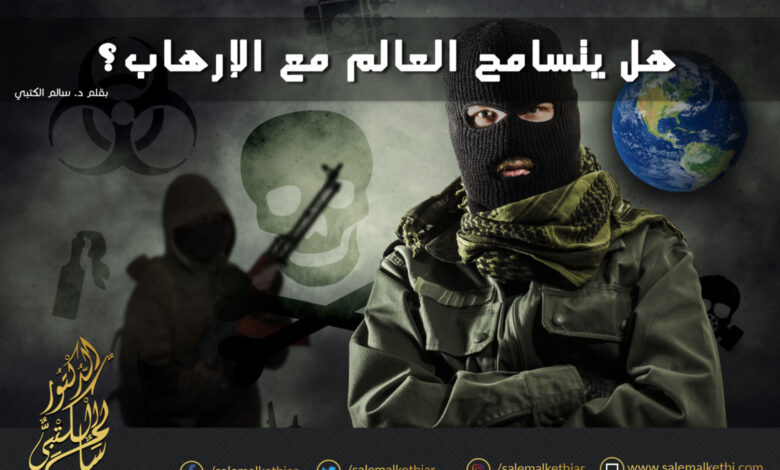
Asking politicians, especially in the West, not to tolerate terrorism raises obvious questions: Can anyone tolerate terrorism? Are there parties, States or leaders that tolerate this malicious phenomenon?
There is a universal condemnation of terrorism. The world adopts a unified stance against violence and terrorism, but on the ground, there are great and noticeable differences. While many international actors fight terrorism, many others do not work hard enough.
The status quo is intriguing for observers and the danger has reached its limits. The sponsors of terrorism have gone too far in their plans. More silence will only cause the loss of more and more lives and even the destruction of whole nations.
Conferences, meetings, lectures have been held over strategies to counter terrorism. The money spent in this regard can finance a complete army capable of eradicating terrorists across the world, yet terrorist organizations are still there. Why? Why is the danger of these organizations spreading from one country to another?
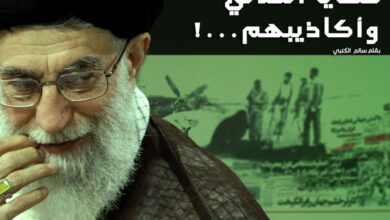
While terrorism is intolerable, interests are preventing tightening the international grip on terrorist organizations. The complexity of the phenomenon comes from the overlap between terrorism and resistance organizations; as they use similar tactics. For instance, Iran finances militias and terrorist organizations and movements under the pretext that they are defending their people and States.
Fallacies underlie the Iranian model and its relationship to the ideologized arms in the Arab world. Obviously, the Lebanese Hezbollah was defending Lebanon against Israeli attacks at some stage. But the group has been exerting its political influence on the Lebanese State. A sectarian party should not hold arms after the conflict or uphold the national army’s roles.
Hezbollah mixes political action with military power. The same weapons that fought one day in defense of a homeland could also be used in internal political conflicts. Such militias, which are supposed to operate under the Lebanese State, can be commanded by the Iranians to wage a war in another country.
The sectarian militias can have the authority to cooperate across borders with other militias such as the Houthi group in Yemen. Hezbollah overtakes the role of the Lebanese State and provides military assistance to the Palestinian Hamas. This kind of assistance should only be provided by States.
The Houthis-Iran relation is another example. Is Iran’s arming of this group and its encouragement to overthrow the constitutional legitimacy in Yemen a “resistant act”? Against whom? The Houthi group betrayed the Yemeni people and undermined the Gulf initiative and international efforts to achieve security and stability. Tehran established, regulated and armed an organization within another State to seize power in fulfillment of its strategic objectives. Then Iran claimed that the Houthi group is a resistant national faction. If this is true, Iran should take its case to the United Nations and the Security Council as do the Arabs now in dealing with Iranian attacks.
The danger of organizations, groups and militias in the Arab region started in 2011. These organizations were malicious agents with the aim of spreading strife in the region. That is what happened.
No one publicly supports terrorism but some tolerate it as long as it serves their interests. Others keep silence because they feel powerless. Terrorist organizations take advantage of these reasons to survive and threaten the international security. But in the upcoming stages, terrorism might turn against its sponsors.