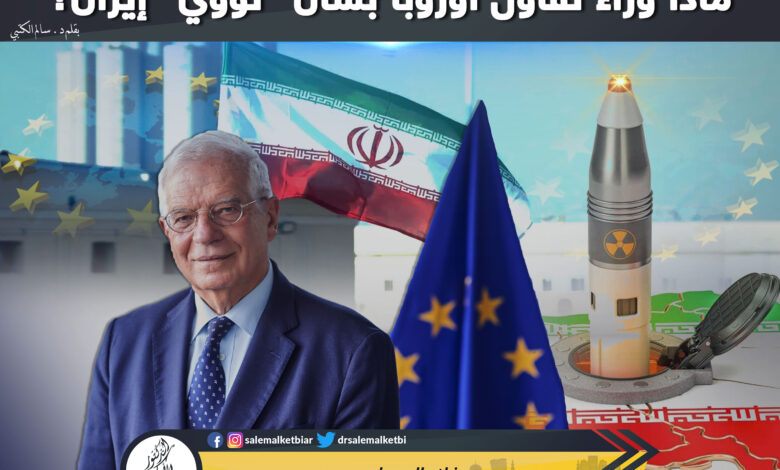
Amid uncertainty about the fate of talks on reviving the nuclear deal, six of which were held between the Iranian regime and G5+1 representatives in Vienna and then stalled after the Iranian presidential election in June, Josep Borrell, the EU’s commissioner for foreign affairs and security policy, said he was optimistic that talks with Iran would resume “in the near future.”
“I am more optimistic today than yesterday,” Borrell said. The most remarkable thing about the development of these negotiations is that their resumption has become the most important news that Western policy circles are waiting for.
The most pressing question is no longer the outcome of these talks and the prospects for reviving the agreement and returning the US and Iran to their commitments, regardless of the terms, and who is the winner and loser in these deals. It is now about the chances and prospects of breaking the impasse and the return of negotiating delegations from both sides to Vienna.
The current situation reflects the success of Iran’s political tactic of stalling and straining the nerves of the US side, as the passage of time without any progress deepens the crisis of the White House, which has not achieved any major results in US foreign policy since it took office in January. Reviving this agreement should be a top priority for President Biden’s team.
But things have turned out differently than expected, as six rounds of negotiations have failed to end the crisis. To make matters worse, US negotiators are now faced with a team of Iranian hardliners leading the negotiations. European mediators are focusing their efforts at this point to get the Iranians to return to negotiations.
At his weekly press conference, Iranian Foreign Ministry spokesman Said Khatibzadeh said, “Consultations with the EU negotiators in charge of Tehran’s nuclear file, Enrique Mora of Spain, have been constructive. We have agreed to continue them in Brussels.” “The obstacles that have prevented the conclusion of the Vienna negotiations in previous rounds must be discussed,” he added.
Iranian mullahs are betting on buying time in the absence of progress. This way they can dismiss any possible accusations of refusing to negotiate. In this context, the mullahs have devised new formulas, such as consultation, to identify the reasons why no agreement was reached in the previous six rounds of negotiations, on the grounds that they “did not want to waste time in negotiations.”
These are clear statements aimed at buying time and strengthening Iran’s position in the negotiations by deepening the crisis and embarrassment of the US side and trying to obtain the maximum possible concessions in each future round of negotiations. This tactic has certainly not gone unnoticed by US policymakers. But the dilemma is how to end these Iranian quirks.
Reference can be made here to a statement made last March by US Secretary of State Anthony Blinken. The best way to deal with Iran is strict diplomacy, he had said. This direct statement reflects the Biden administration’s experience with Iranian negotiating strategy.
But the dilemma remains having the will and determination to implement this experience. The only position in which Blinken displayed such tough diplomacy was his joint press conference with Israeli Foreign Minister Yair Lapid during his recent visit to Washington. Blinken said the US believes that a “diplomatic solution” is the best way to prevent Iran from acquiring nuclear weapons.
But he stressed his impatience more than ever, as negotiations to revive the nuclear deal have been suspended since June. “But it takes two to engage in diplomacy and we have not seen from Iran a willingness to do that at this point,” he said.
“We are prepared to turn to other options if Iran doesn’t change course,” he briefly warned in response to the threat of force against Tehran made by his Israeli counterpart Yair Lapid. Blinken chose not to directly threaten military force, speaking only of “other options.” But the Israeli minister set the record straight.
The whole world knows what the other options are, he explained. The optimism on the European side that the crisis will soon be eased by the resumption of nuclear negotiations with Iran means little to the parties who view the mullahs’ political maneuvering and capriciousness with great concern.
Foremost among these is Israel, which fears that time is running out and that the mullahs will escape with nuclear capabilities that will flip the script, reshape alliances, and upset the regional and even international balance of power.