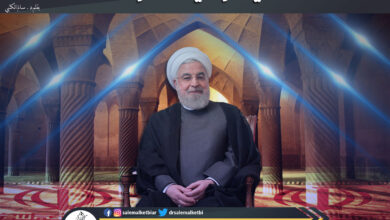
Many observers and analysts are talking these days about the impact of the Iranian political situation, dominated by figures of the radical wing, in the total absence of the voice of moderation and pragmatism as some have called it in previous periods.
Much of the discussion focuses on the expected international geostrategic implications of this situation. These are, of course, important reflections, which have proven regional extensions. The regional ramifications of Iranian hardline dominance, regardless of the motives and objectives I have discussed in other articles, may be more serious than the international dimension of these changes.
The Middle East, namely the GCC states, Iraq and Syria, and Israel, are most affected by Iran’s violation of international laws and the UN Charter. They are paying for Iran’s continued recklessness in the region since the signing of the Joint Comprehensive Plan of Action (JCPOA) with the P5+1 group in 2015.
First, it should be noted that the treatment of countries in the region with a hardline Iranian president is far from new. Ahmadinejad previously came to power in Iran (2005-2013) as the successor to Mohammad Khatami. He has transformed the face of Iran, in word and deed.
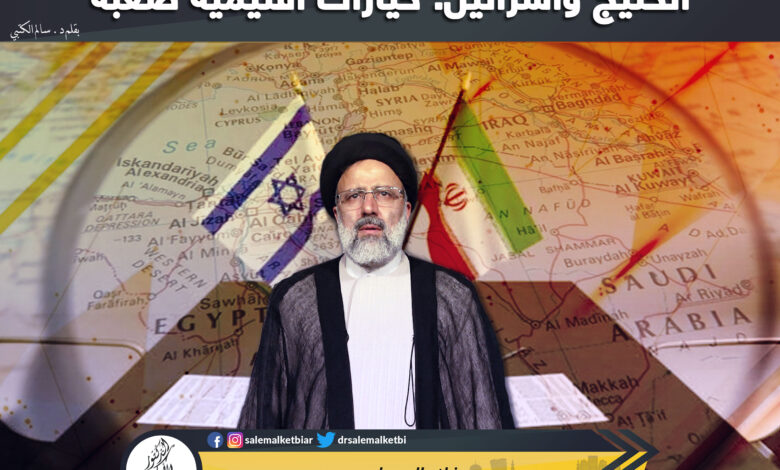
But what is new in my opinion is that Ibrahim Raisi may well be “Iran’s most radical president” as Israel describes him. This is for several considerations, the most important of which is the difference with Ahmadinejad in terms of career.
One might say that Ahmadinejad was an extremist at the level of rhetoric and a populist type of president who likes to mobilize his supporters with rousing speeches and fabricate political and verbal battles with the regime’s opponents inside and outside. Raisi, however, may be quite different in terms of his hard line and career.
The conformity of his positions with Supreme Leader Ali Khamenei precludes any revision, even symbolic, as was the case with Rouhani and others, of the leader’s foreign policy decisions.
Moreover, his personal ambition to succeed the current leader will make him an inflexible figure, since preserving the principles and spirit of the Khomeini revolution is one of the most important traits of the leader chosen by the Council of Experts. So Raisi will serve as the president with one eye on the leadership seat.
He will try to reproduce the experience of Khamenei, who served as president and then sat in that seat to take over from Khomeini. The new president’s age, experience in the regime’s institutions, and close ties to Khamenei make it possible for him to vie for the top of the power pyramid in the event of the death of the Supreme Leader, who is suffering from several diseases.
Raisi will also be keen to build loyalty to the IRGC and ensure the satisfaction of its leadership, so that his presidential career and aspirations for the next post go smoothly. That is, proceed with the development of Iran’s nuclear program as planned by the IRGC leadership.
He will also be under the influence of these leaders, unlike President Rouhani and his governmental team, who have not been in agreement with the IRGs, especially in the area of foreign policy. That certainly showed up in Foreign Minister Javad Zarif’s leaks criticizing General Qassem Soleimani’s foreign policy interventions.
The regional behavior of the mullahs’ regime in the next phase could depend entirely on the outcome of the Vienna negotiations. What’s dangerous is that the outcome will not end Iran’s reckless actions regionally, whether they lead to a resolution that requires the US to renege on the deal and the mullahs to resume their obligations in the agreement, or without an appropriate resolution.
Either way, the agreement, whether standing or dead, cannot check Iran’s regional behavior. This is especially so with respect to sectarian armed arms in different countries and regions.
It is well-known that the agreement is the strategic lever on which Iran’s policy of regional strategic expansion has been based since 2015. The existence of the agreement or its technical dead will not change much in this regard.
It is then that there will be discussions on new negotiations between Iran and international powers on other topics and issues such as the Iranian missile program and regional influence. The question now: What are the options for the countries in the region?
Certainly, dealing with the mullahs’ system individually does not help much. This is what Iran has been seeking for years. It wants to dismantle the regional system represented by the GCC and deal with each neighboring country separately in view of a new or different regional security system in which Iran plays the main role. The mullahs are aware that the united regional front is a problem for them.
Everyone remembers the Iranian regime’s anger at the establishment of official relations between the UAE and Israel. However, coordination, cooperation and development of a joint regional strategy to counter Iranian threats can be a powerful pressure on the mullahs’ behavior in the next phase.
Ultimately, the choices for countries in the region in the face of a more radical Iranian regime may be easier than many think. The hard line removes the mask of moderation from the mullahs, opening the door to polarization of regional positions and their division into supporters and opponents of rapprochement with Iran.
As such, the existence of revealing Iranian positions gives everyone the opportunity to think calmly away from the trap of deception.