Analysis of Russia’s revenue from organizing the 2018 World Cup has been confined to economic aspects. They indicated growth rates of at least 3 percent in the coming years due to Russia’s growing foreign investment attractiveness. In addition to that, there will be direct returns due to the high visits to Russia during the tournament and afterwards.
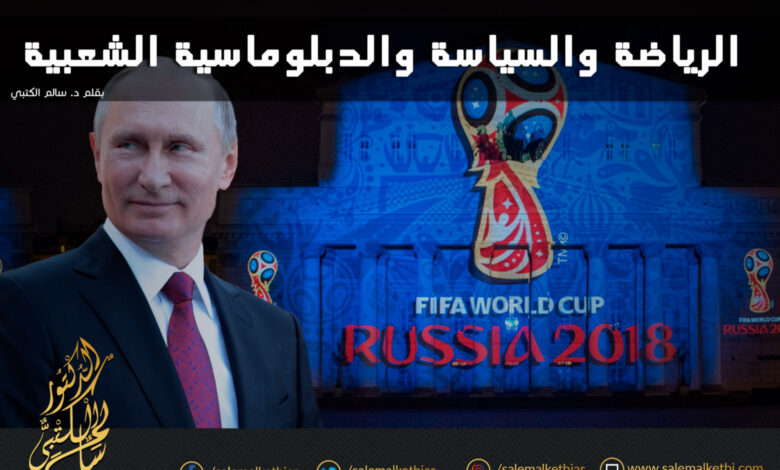
The political aspect was more important to the Russian leadership, which has played a major role in supporting this tournament. President Putin revealed this importance on the eve of the final match of the championship. He said at a concert at Moscow’s Bolshoi Theatre that the tournament has succeeded in crumbling myths and prejudice about Russia.
President Putin said in his speech: “We are glad that our guests saw everything with their own eyes and that the myths and prejudices crumbled.” The Russian president stressed that citizens in the country are open to communication, friendship, cooperation and the completion of useful joint projects. He added that championships like this, FIFA’s Championships and other sports, are unique occasions to unify people. He said it is a chance to fully disclose the so-called popular diplomacy that has served, throughout the ages, to promote peace and prosperity on our planet.
Putin took this tournament as a precious historical opportunity to change the prejudices and the remaining vestiges of Soviet-era. These remnants had no chance of change except through the most popular game in the world.
Putin is working to gain a strong international standing for Russia, either through sharp power or through soft power. He realized that Russia has a great cultural and historical heritage that can be used to restore Russia’s prestige and strengthen its global standing.
If Russia spent more than $ 10 billion on an international public relations campaign to change prejudices about it, it would not have been possible to achieve this success and win the love of hundreds of millions of people.
The World Cup in Russia was not just a football game but a global folkloric gathering in which cultures and civilizations were mixed. Young people from different countries expressed their strong bond to their national teams. This is itself a competitive fight in presenting one of the soft power aspects of States in the 21st century.
Few people in the world knew about Croatia. Because of her strong support for her country and her interaction with football, Kolinda Grabar-Kitarović, Croatian President, has become one of the most famous politicians in the world. This made her most popular and accepted by people in the east and west.
World Cup 2018 was different. It has undergone radical changes, setting new rules for world football system. A football system that no longer has the fundamentals of the traditional football powers such as Brazil, Argentina and Germany. Croatia was present in the final match of the tournament. This has established a new rule that planning, action and success is no longer tied to traditional calculations. Diligent new actors can achieve victory.
This rule applies not only to sport but also to politics. There are countries emerging to the top of global competitiveness at a remarkable speed. There is a remarkable decline of traditional forces that did not interact properly with the developments of the 21st century. Throughout history, these were the laws of the universe. Nations that keep up with development and employ their resources to rise and compete can prove successful.
In the era of globalization, sport has become one of the keys to power and influence. The impact of sport on the global collective consciousness should never be underestimated. The issue is no longer just games and championships. But it is transformed by the media development into a world market for cultures. It is no longer limited to tourists’ visits and spending during the tournament. It is rather about how to employ championships to support the mental image about countries and strengthen soft power. This will help attracting investment and turn this mental image into a resource of power.