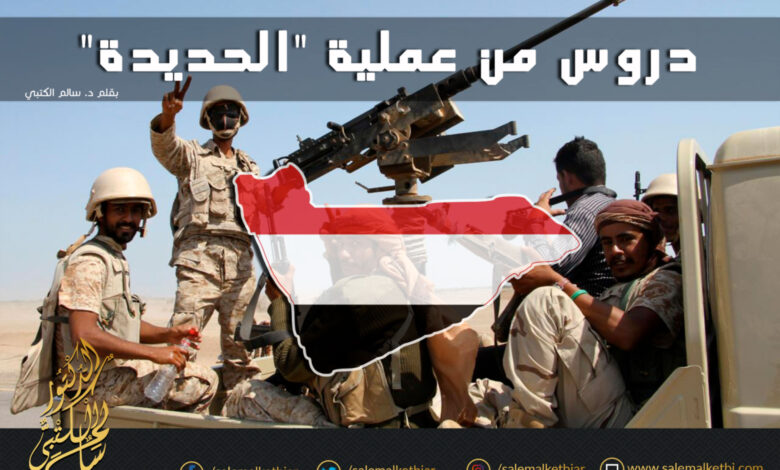
The Saudi-led Arab Coalition waged a military operation in Al-Hudaydah. It was highly strategic and gave lessons to the Iranian-backed militias in Yemen. The attack dealt with militias implementing the strategies of the fourth generation of wars, especially the street war strategy.
The two last decades have witnessed military operations similar to that in Al-Hudaydah, especially in Iraq, Syria and Libya. The Saudi-led Arab coalition faced a very complex challenge. People in the city are loyal to the coalition and to Yemen’s exiled government. Preserving the lives of the people topped strategic objectives. The battle took place under international eyes.
The coalition preserved the noble goal of the operation – freeing the city from the Iranian fingerprint.
Military experts believe that freeing cities is not an easy task. Planning and implementing Al-Hudaydah operation took a lot of time to ensure it meets the intended goals – no losses at the level of human lives and infrastructure. Military operations in Iraqi and Syrian cities led to high casualties. Military caution prevailed planning the operation in the Yemeni city. It taught military planners how to deal with challenges facing regular armies in the 21st century.
The Al-Hudaydah operation balanced military action with humanitarian action. It managed to carry out military operations and humanitarian action. The battle emphasized the priority of civilians’ safety. The Arab coalition avoided fighting street wars but used power wisely to target Houthi elements without harming civilians. Such a task requires high skills and accurate information to provide a more developed model of military operations. The operation did not lead to human and material losses. It provided a highly developed model that took into consideration the safety of civilians. The battle overcame serious challenges facing modern armies in the fourth generation mode of wars in the 21st century. It worked to maintain providing continuous assistance to relieve civilians and sparing them the effects of war. The Arab coalition achieved a military victory amid complex conditions because the militias were using civilians as a safety wall.
The coalition knew how to use military power in the benefit of politics. The main goal behind Al-Hudaydah operation was to pave the way for a political settlement on the backdrops of Iranian-aligned Houthis hostile activities. Keeping things as they are in a city full of innocent civilians is a humanitarian tragedy.
The efforts of the UN envoy were in parallel with calculated military plans. Dr Gargash said that the assault aims “to help the UN envoy [Martin Griffiths] in his last chance to convince the Houthis to withdraw unconditionally from the city and avoid any confrontation.” “If this does not happen, be assured we are determined to achieve our targets,” he said. It is a strategic step that combined the military action with political goals with consideration to developments on the ground.
What is happening in Al-Hudaydah is a political action. The coalition countries are determined that military operations pave the way for a political settlement there. But the Houthis’ intransigence prevents this. They think the situation there would make them control Yemeni economic capabilities. Al-Hudaydah was a passage to smuggle the Iranian weapons and missiles used to destabilize Yemen and the neighbouring countries. It was a gate for the Houthis to receive revenues of the Red Pole.
Freeing Al-Hudaydah is an inspiring model in the military action. The operation proved highly developed fighting skills that can overcome the challenges of the wars in the 21st century. The battle will achieve its goals and free all Yemen. The Yemeni people will regain its life after it has long suffered Houthi militias’ hostility.